


The original intention of insulating glass was to prevent condensation or frost on the window glass, which would affect the lighting and sighting because of its excellent thermal insulation performance. For general building, the area of doors and windows accounted for more than 20% of the building area, and glass accounted for more than 70% of it,the heat consumption caused by windows&doors account over 50% of the overall buildings,then improving the insulation and durability of insulating glass is of great significance to the building energy saving industry.
Insulated glass is composed of spacers, desiccant, sealant (or composite material) and glass .These materials form the edge sealing system.The service life of insulating glass is directly related to the quality of the edge sealing system and the manufacturing process, and is also affected by other factors such as installation conditions and application environment.
The failure rate of insulating glass is 3% to 5% after 2 years.In which 63% was caused by increased dew point ,glass burst accounts for 26%; other reasons accounted for 11%.The condensation inside the insulating glass is the most important reason for the failure of the insulating glass.


Glass condensation inside IGU-Mornbm
The dew point of insulated glass is <-40℃. Normal windows application temperature won’t lower than -40℃ ,but why IGU condensation happens?
Water molecules penetrate into the IGU without being absorbed by the desiccant.
Here let’s analysis the reasons for increased dew point completely:
- The glass was not cleaned thoroughly.
With water vapor and water droplets, the adhesive force of the sealant to the glass will be greatly weakened, resulting in poor sealing effect of the insulating glass, leading to air leakage at the edge of the insulating glass, and increasing the possibility of external moisture entering.

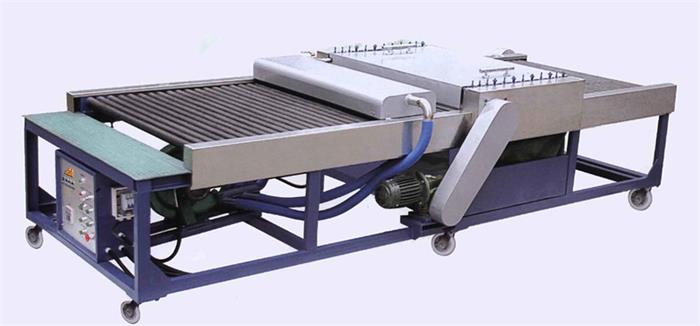
Glass washing machine-Glass must be cleaned throughly before sealing
- The effective adsorption capacity of the desiccant is low.
The requirement for desiccant is not only to absorb water vapor inside the IGU, but also to continuously absorb the water vapor diffused into the air through the adhesive layer to continue to maintain the required dew point .If a low-quality desiccant is used, its original water absorption capacity is relatively poor, and it will be saturated in a short time, and it cannot effectively adsorb the water molecules that diffuse into the air layer, which will cause the water molecules to gather in the air. , The dew point of insulating glass rises.

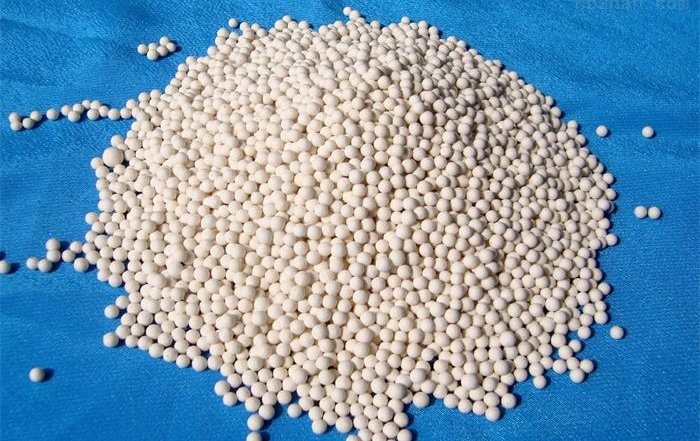
3A desiccant used in IGU spacer
- The filling volume of desiccant.
The filled desiccant should not less than 70% of the length of the aluminum spacer. Some manufacturers, in order to save costs or improper operation by the workers, the filling volume will be less than 70%.,the water vapor in the air layer of the insulating glass often exceeds the remaining adsorption capacity of the filled molecular sieve, which will greatly increase the possibility of condensation of the insulating glass.
- The glass sealing time after filling desiccant.
IGU processing including cutting and assemble aluminium spacers,filling desiccant,and coating primary buytls,then sealing IGU system. there will be a time difference between them. At that time, the molecular sieve has absorbed a large amount of moisture in the air , resulting in insufficient remaining adsorption capacity, thereby increasing the possibility of condensation of insulating glass.

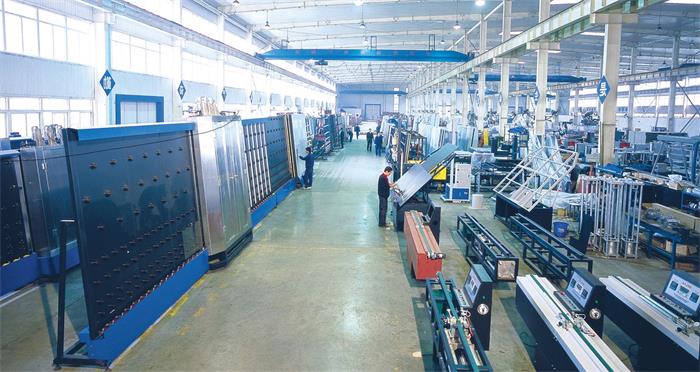
IGU production line
- The suction holes of the aluminum spacer are too small.
Even if the molecular sieve is filled enough, spacers with small absorption holes cannot quickly absorb the water vapor in the insulating glass , resulting in an increase in the dew point.


High quality aluminium spacer
- Bad quality secondary sealant.
Insulating glass secondary sealant is the key to prevent the condensation. The two sealants(primary sealant and secondary sealant) should be compatible and should not be miscible or react. Otherwise, it will easily lead to the failure of the edge seal and the entry of water vapor; and the second sealant has unstable quality and low molecular weight, under the ultraviolet rays of the sun, it migrates and volatilizes into the IGU ,In addition to the effects of ultraviolet rays, water and moisture in the environment will accelerate the aging of the sealant, thereby accelerating the speed of water vapor entering the air space.
- Bad sealing process.
In the sealing process, there are often leakage, breakage, and negligence in sealing; as well as the improper mixture of two components, resulting in gaps inside the sealant, causing air leakage;
- Insufficient secondary sealant depth.
For the sealant of insulating glass, the main factors affecting the diffusion of water molecules are the water permeability index, sealant thickness and the partial pressure difference of water vapor inside and outside the air. Thin sealant thickness will help the penetration of waters.

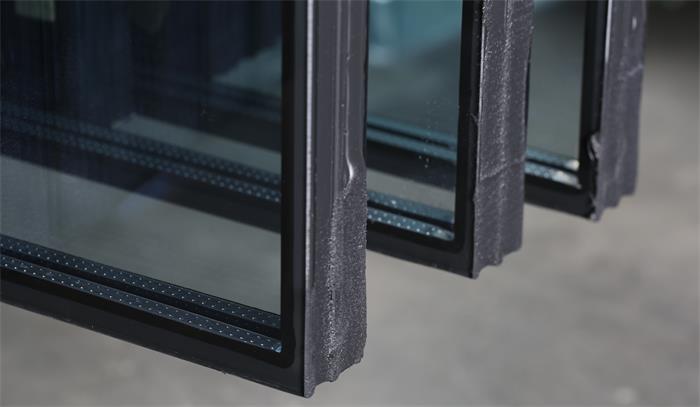
Secondary sealant depth should comply with international standard
- Preservation of desiccant.
After the molecular sieve is opened the product that has not been used up in time, is not sealed in time, or is not tightly sealed, causing outside air to enter, and some molecular sieves will fail after inhaling moisture in the air, resulting in the possibility of condensation
- Compatibility test.
When assembling insulating glass, a compatibility test should be done, and a matching sealing material that is compatible with the insulating glass sealant should be selected.

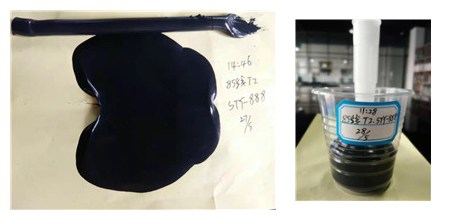
Butterfly test forIGU sealant
- The sealing types.
Large-area IGU glass does not use vertical sealing process, which causes IGU to be concave or expand. After times the edge deformation will cause the glue and glass to separate, and water vapor will take advantage of the void.

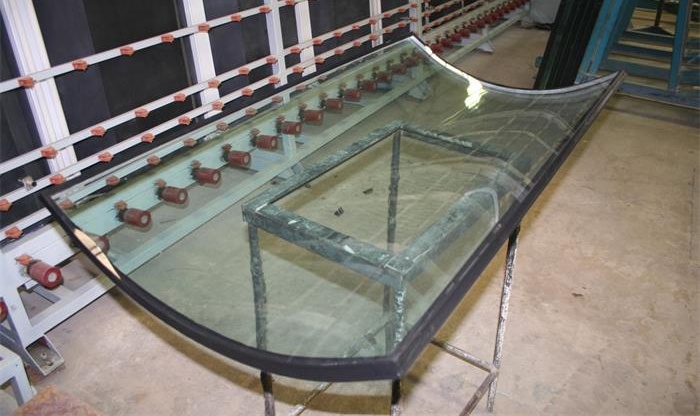
curved insulated glass will be produced horizontally
Table of Contents
Solutions to avoid insulated glass condensation:
1.Desiccant:
- Molecular sieves that have been opened that have not been used up in time should be sealed in time.
- Use 3A desiccant that meet standard.
- Filled desiccant should be at least 70% of the aluminium spacer total length.
- IGU sealing process should be finished within 45 minutes after filling desiccant.
2.Aluminium spacer.Aluminium spacer should comply with standard with reasonable breathing holes.
3.Glass:The glass must be carefully observed before combining the pieces to prevent liquid water exist on the glass.
4.Secondary sealant.
- Secondary sealant thickness should comply with standard,for windows&doors should be at least 8mm,for curtain wall should be similar to spacer thickness.
- When assembling insulating glass, compatibility test should be done and choose a matching sealing material that is compatible with the insulating glass sealant.
- Try to seal the IGU with vertical sealing process.
- Use quality secondary sealant and mix them completely before sealing IGU.
It is necessary to control the selection of raw and auxiliary materials, processing, manufacturing, equipment, technology, environment and other links to prevent condensation or other quality problems of insulating glass, extend its service life, reduce maintenance and replacement costs.
Download this article here:Insulated glass condensation reasons