


Table of Contents
Low e coating position-Surface #2 VS Surface #3
Most low e coatings for insulated glass are placed on surface #2,but some projects have the low e coating on surface #3,but what’s the difference if we place the coating on #2 and #3?
Here we’ll introduce how the low e coating position affect the glass performance.
Main difference -Coating position on surface #2 & #3
1.Different SC value.
By placing low-E coating on surface #3,the SC value will be much higher on surface @3.
Let’s take an example of typical 6LOW-E+12A+6C and 6C+12A+6 LOW-E with Jinjing Optiselec T70.
By placing low-E on surface 2,the SC value is SC value is 0.34,while on surface #3,it’s 0.41,increased by 20%.So clients should adjust the coating position according to the climate and SC requirement.In cold areas,the low e coating shall be placed on surface #3 to get higher solar coefficient and sunlight,in hot areas,low e coating shall be on surface #2 to avoid sunlight.
We can also note that whether on position 2 or 3,the U value are the same.
Solar radiation consists mainly of short-wave energy. This short-wave solar energy can pass through clear glass with relatively little resistance. When Low-E is placed on surface #3, most incoming solar radiation first passes through the outer glass pane without reflection. The energy then enters the air or gas cavity and reaches the interior pane, where it is absorbed and converted into heat.
The key advantage of surface #3 Low-E lies in how it handles long-wave infrared heat. Once solar energy is absorbed inside the IGU and the indoor space begins to warm up, the Low-E coating reflects long-wave heat radiation back toward the interior. This reduces heat loss while still allowing strong solar heat input. As a result, the overall Solar Heat Gain Coefficient (SHGC) is higher.
In contrast, Low-E on surface #2 reflects a larger portion of solar energy before it even enters the cavity, reducing solar transmission. Therefore, surface #3 Low-E is ideal for heating-dominated or cold climates, where maximizing passive solar gain improves indoor comfort and reduces heating demand.
By selecting Low-E on surface #3, designers can achieve a balanced solution: excellent insulation performance combined with enhanced solar heat utilization.
2.Difference color and visual effect.

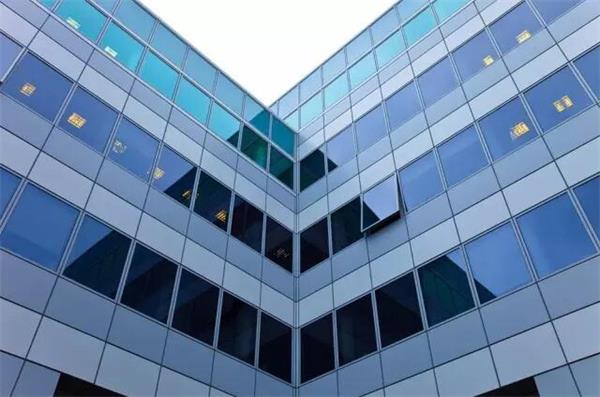
Low-e-glass-relfective-color-morn
As we know most low e coating reflect color are usually light grey,blue,and silver color,while the back side of the low e coating are quite different,especially some double silver low e will have red or purple colors even if the front color is blue,so if we place the coating on surface 3,the reflect the color will be much different,in addition to the interfere of the 1st piece glass reflect,the color will varies.
Morn is your turnkey low e coated insulated glass supplier from China,we would like to offer professional suggestions for your project,welcome contact us for more info.